For an art project slash life project. When she first looked at herself in the mirror, she wept.
She showed me the video, and told me that there is something very powerful about looking at yourself when you are weeping, or when you are mourning. She said it allows you to feel empathy for yourself: it allows you to love yourself. "Double pain, and double relief too."
OYP_VIDEO IN THE BOX N˚2 from Anita Sto on Vimeo
Maybe because of this, I documented S and I, seconds after finding out last night's heavy news. I wanted to know what our grief looks like. Suffice it to say that today is another day for pictures and mirror looking.
Saturday, July 28, 2012

Friday, July 27, 2012
On cancer.
What do you do when one of your family members tells you that their cancer came back, that it is agressive, and that they have mere weeks (to months) to live?
This happened just moments ago. I feel paralyzed.
This happened just moments ago. I feel paralyzed.
Caputo on faith, hope, and charity.
So we start to see how deeply the not is embedded in the path, how deeply the impasse is embedded in the pass, and more generally how deeply the impossible is embedded in the possible--almost to the point that, far from being a simple play on words among wild-eyed French theorists, it is beginning to look like a law, and indeed one very close to the religious heart. Think about faith, hope, and charity singled out by St. Paul. When is faith really faith? Not when it is looking more and more like we are right, but when the situation is beginning to look impossible, in the darkest night of the soul. The more credible things are, the less faith is needed, but the more incredible things seem, the more faith is required, the faith that is said to move mountains. So, too, hope is hope not when we have every reason to expect a favorable outcome, which is nothing more than a reasonable expectation (the virtue of a stockbroker), but when it is beginning to look hopeless, when we are called on to "hope against hope," as St. Paul says (Rom. 4:18), which is a magnificently deconstructive turn of phrase. This is above all true of love, where loving those who are lovable of those who love you makes perfect sense. But when is love really love? When does love burn white hot? When we love those who are not lovable or who do not love us--in short, when we love our enemies. In other words, we are really on the way of faith and hope and love when the way is blocked; we are really under way when the way seems impossible, where this "impossible" makes the way possible. It is precisely the "not" that makes the "path" kick into high gear. -What Would Jesus Deconstruct?
Caputo on a beautiful risk.
The relation with the other person is a journey we never complete, where that incompleteness is not an imperfection but testimony to the perfect excess of the other it is not a loss but a source of endless novelty and discovery. Were the opposite true, our relation to the other would be ruined. We can never be sure of what is going on in the heart of the other but we affirm that distance rather than being demoralized or defeated by it. The relation to the other is bracing but risky business. To give a very concrete example of what I mean, when you get married, you are saying "I do" not only to who this person is, or who you think this person is, but to whomever or whatever this person is going to become, which is unknown and unforeseen to the both of you. That is a risk, what Levinas called a "beautiful risk," but it is a risk all the same, at best a fifty-fifty chance if we can go by the divorce rates. But the risk is constitutive of the vow or the commitment. It is the faith these two people have in each other that we admire, the willingness to go forward, even though the way is not certain, that leads us to describe it as beautiful. If it were a sure thing, it would be about as beautiful as a conversation with your stockbroker. -What Would Jesus Deconstruct?

Wednesday, July 25, 2012
On homelessness and pioneers.
Kristus er som en lilje på marken og fuglen i luften.
Christ is like the lilly in the field and the bird in the air. How so? Because he has nowhere to lay his head. In Philosophical Fragments, Kierkegaard's pseudonym, Climacus, wonders if this made Christ unable to understand the essentially human, as humans tend to care about home and head-laying and things of the morrow.
Inspired by these same passages, my dear friend, Deidre, pointed out (first while sitting on couches in her temporary living room, and second while standing at a Mormon pulpit while I sat on a Mormon pew) that in the very same scriptural breath that Christ mentions some of these things, he asks his followers to do the same, by simply saying, "Come follow me." She mentioned that he says other strong words, about the dead burying their dead and son being against father.
It may not be surprising, then, that early Latter-day Saints were asked to follow Christ in homelessness, by giving up everything familiar and comfortable to follow the dictates of their conscience and their new faith. What may be more surprising is that they were repeatedly asked to build temples (i.e., houses) for the Lord, amidst personal poverty, uncertainty, and external persecution.
Plans were made for temples that could not be finished due to the third of those "amidsts." Others (the Kirtland and Nauvoo) were completed, following great acts of sacrifice, time, and belief. Nauvoo took at least 5 years to build. And still they were pushed Westward. Still they were without a home.
When some of the saints arrived in Utah, it was announced prophetically that it "was the right place." Notwithstanding this, I wonder how much faith and hope and love it must have taken to be willing to work so carefully and painstakingly on a new temple, a new home, that they did not know for sure that they would get to enjoy. It makes the already impressive 40 year figure that much more impressive, and helps me feel greater gratitude for this building that means so much to S (as it meant so much to his ancestors who helped build it).

One of my friend's points in her inspiring speech is that many (if not most) of the things that we try to do in life fail, or don't last. We might lose a job or have trouble finding a job in the first place. We might anything. But (and this is a big But), we just build again. We just try again. We just work to have a (Christ-centered) home again, or to feel at home (my personal crisis).
This makes it even more beautiful that the Nauvoo Temple was rebuilt, and makes me feel honored to have been married by the architect who designed it.

Christ is like the lilly in the field and the bird in the air. How so? Because he has nowhere to lay his head. In Philosophical Fragments, Kierkegaard's pseudonym, Climacus, wonders if this made Christ unable to understand the essentially human, as humans tend to care about home and head-laying and things of the morrow.
Inspired by these same passages, my dear friend, Deidre, pointed out (first while sitting on couches in her temporary living room, and second while standing at a Mormon pulpit while I sat on a Mormon pew) that in the very same scriptural breath that Christ mentions some of these things, he asks his followers to do the same, by simply saying, "Come follow me." She mentioned that he says other strong words, about the dead burying their dead and son being against father.
It may not be surprising, then, that early Latter-day Saints were asked to follow Christ in homelessness, by giving up everything familiar and comfortable to follow the dictates of their conscience and their new faith. What may be more surprising is that they were repeatedly asked to build temples (i.e., houses) for the Lord, amidst personal poverty, uncertainty, and external persecution.
Plans were made for temples that could not be finished due to the third of those "amidsts." Others (the Kirtland and Nauvoo) were completed, following great acts of sacrifice, time, and belief. Nauvoo took at least 5 years to build. And still they were pushed Westward. Still they were without a home.
When some of the saints arrived in Utah, it was announced prophetically that it "was the right place." Notwithstanding this, I wonder how much faith and hope and love it must have taken to be willing to work so carefully and painstakingly on a new temple, a new home, that they did not know for sure that they would get to enjoy. It makes the already impressive 40 year figure that much more impressive, and helps me feel greater gratitude for this building that means so much to S (as it meant so much to his ancestors who helped build it).
One of my friend's points in her inspiring speech is that many (if not most) of the things that we try to do in life fail, or don't last. We might lose a job or have trouble finding a job in the first place. We might anything. But (and this is a big But), we just build again. We just try again. We just work to have a (Christ-centered) home again, or to feel at home (my personal crisis).
This makes it even more beautiful that the Nauvoo Temple was rebuilt, and makes me feel honored to have been married by the architect who designed it.

Sunday, July 22, 2012
From Minnesota with Love.
Minnesota has been lovely (albeit a tad too hot for me, with a tad too many mosquitos). I fly back to LA this evening, and while it will be good to no longer have to talk to Spencer through the interwebs and phone lines, I will miss this calm, pretty place. I will miss the green fields and green trees. I will miss the quiet. I will miss the safe feelings I feel here. I will miss the ivy covered brick buildings. I will miss the library. I will miss the track a small jaunt away that helped me feel happier (and more myself) than I have felt in a long time. I will miss hearing snippets of Kierkegaard conversations everywhere I go. I will miss being with one to two good friends everywhere I go. I will miss my Danish classmates and my Danish class. I will even miss the fact that the majority of Kierkegaard scholars are as (socially) anxious as Kierkegaard. I will miss. I will miss.
I will/do look forward to Spencer, taco trucks, the ocean, two little dark haired darlings who I love, their angel mother, my grandma with (and without) her always abundant avocado and lemon trees, and the weather that is very nearly always perfect.
xo
(pictures and follow ups to come)
Friday, July 20, 2012
Colorado.
My heart aches for you this summer, for your fires and your bullets, the first disaster natural, the second manmade, but still a disaster. I puzzle over the right response, and admit that I don't know how to respond. Earlier today I saw someone post on facebook about how she feels convinced that the right course of action for her personally is to get a license, so she may carry her own weapon, concealed. Others on her thread seconded her, thirded her. I couldn't shake the feeling that more weapons is not the right response. At the least, it is not the right response for me.
I suppose that it is possible that in a number of cases having someone present with a concealed weapon may in fact have the power to change what would otherwise be a catastrophe, but that assumes that a lot of specific things happen, and that the one carrying the concealed weapon is a moral and responsible citizen, who is also proficient in shooting firearms accurately. It assumes that the right to carry weapons not only applies to militia,* but to ordinary citizens, and that citizens who will take advantage of that "right" will only be the good ones, rather than the ones who first pull them out, in sometimes very public settings--in such settings that should be safe settings, but that are made to feel unsafe.
The clearest example of this is in our schools, both high school and university. So what do we do when children have to go to school? What do we do when that place that should be a beacon of learning and light can contain so much darkness? And now a place that was built for pleasure and pretend has become a place of a very violent reality.** I understand that schools and movie theaters are not the same thing, that people don't have to go to the cinema. I also understand that they will likely be as safe tomorrow as they were yesterday, before the murders, but I understand something further, that they won't feel as safe. It is partially that feeling that I am also grappling with.
Why? Because we have to live our lives. We still have to do the things we would do, and it is best to do them without fear. Does that mean then, that we should strive to overcome our fear of death or pain or rape, or live in a way that even if the worst things happened we would be okay within ourselves, or be okay in our eternity?
*At lunchtime I sat with friends from my Danish course and listened to one woman from South Africa explain how America, in general, feels about this to a woman from Russia. It made me sad listening to them, because they, as individuals removed, can see clearer what some of our problematic assumptions are. I think that they are right, and I think we need to do something right, so that this type of senseless, random violence may not continue. This article gets at the heart of my feelings better than anything else I have read on the matter today.
**This also leads me to wonder the correlation between the particular movie being screened and the horrific actions. Did it make any difference what the film was? Could the same thing have happened at a different kind of movie? I know that people on one certain side argue passionately about the number of people who play violent video games and watch violent films or shows that do not go out and make violent, real life choices. But I still wonder. I still may not be entirely convinced.
Thursday, July 19, 2012
A breakthrough.
Sometimes at night Spencer (who is far away in LA) and I (who am close at hand in Minnesota) read the Book of Mormon together via the magic of video chat. Or really, he reads to me from the Book of Mormon, and I follow along in its dansk (i.e., Danish) counterpart: Mormons Bog. Sometimes I get ambitious and try to tell him what it says in English before he can tell me by looking at the Danish. Sometimes when I do that I know a few words. Yesterday I translated ten complete verses to him--slowly and haltingly, like the way a kindergartner reads aloud from a simple book--but I did it, nonetheless. It was a really beautiful moment, to realize that I am indeed learning how to read this foreign tongue.
Jeg læser Mormons Bog i dansk!

Jeg læser Mormons Bog i dansk!

Tuesday, July 17, 2012
After Life.

I have been watching a plethora of phenomenal foreign films--mostly in Danish, but one (tonight) in Japanese. This night's film was slow, but still beautiful. It was also centered around two themes that I deeply cherish: memory and recollection.
In the film, when people die, they all go to the same place, for one week. While there they meet with counselors to help them choose a single memory from their lives. The memory is to be the most meaningful, most joyous, or most representative. It is generally a very small memory--sitting on the bench with the beloved, swinging and eating rice balls amidst family and bamboo, or wearing a red dress in a cafe and dancing with one's older brother. They have only three days to choose.
It was beautiful to listen to the counselors and deceased tease out the memories, and try to narrow down to the one. It was beautiful to think about what memory I would choose, and how, and why. What came next was also beautiful, as well as thought provoking: After the memory was selected, the workers helped them recreate the memory viscerally and visually, in film. The ones remembering were present for the recapturing of the memory, to feel it and participate in it again, but this time there were others too, in their intimate moments, and the clouds that looked like cotton candy were now strung on invisible wire, and made out of cotton balls, making the memory the same, but not the same; real, but less real. On the last day the movies would be screened. The new memories would be screened, and then the people would go on, where they presumably live with or in that memory, alone, with no other memories, for eternity.
I told Spencer that part, and he thought it sounded very sad, to have only one memory. It wasn't necessarily sad to me. It mostly made me think of Nietzsche, and his eternal recurrence of the same. If the angel-demon came to us, and said we had to live one memory over for the rest of our life (or the rest of our eternal life), would we rejoice, or would we weep? This particular case does bring up important things about forgetting though. I would say that even in the recollection of the single memory, there was forgetting. The woman couldn't remember exactly how the dance went. Another women sat in a circle making large rice balls with strangers to try to recapture the rice balls she ate with loved ones.
One women didn't want to forget anything. She told the man she loved (that she could not tell that she loved) that she would never choose just one memory. She would never leave that place where she could keep them all. She would stay there, keeping him inside of her forever. He chose to leave, to continue, but promised that he would remember everything he learned there, that while it took him a long time to look at his life as a life of happiness, he finally understood that his life brought happiness to someone else. And it did. I presume to multiple someone else's.
But that knowledge allowed him to select one memory, and to continue onto eternal remembrance. Still, in his case (which was rewarded special permission) he chose a memory from the in between place, where he sat on a bench and saw a glimmer of joy in his life, that allowed him to look at it with love's vision. When they filmed him on that bench, he was looking at them--the filmmakers, and those he worked with. Those he was. So what did he remember from his memory? The internal thoughts, or his outward view? I hope both, somehow.
There was one earlier scene were a resident was permitted to watch videos of his life, to get ideas for his single memory. He was warned that they would not be quite like his memories, because they came from outside of him. Only later did I realize that they could have just found the day, the actual memory from each person's videos, to show them for all eternity. Instead they recreated it anew, from their memory. I wonder if it has something to do with the warning: They are choosing to preserve the deceaseds' memory of the event, rather than the event itself.
I told my mom about this movie tonight, nearly immediately after watching it. It is her 60th birthday. She told me almost immediately after telling her the premise that she knew exactly what memory she would choose. It was when my siblings and I were young, in Klamath Falls, Oregon, at a park she used to take us to in the Summer. We swam there. The little ones (including myself) swam in the kiddie pool, the wade pool. The others could go deeper. They were big kids then. My mom told me they played shark. We sometimes went to A&W after. They still had the frosty mugs and cheap kiddie cones. Her friends would be there too, with their tiny ones. It was a happy time for her, and for us also.
If I chose a memory with my mom, it would be sometime when I was young, and having a rough day, and she would climb into my bed with me, and put the covers over both of us. She would lay there and talk to just me, for a long time. And I would feel better. Or it would be when I was sick, and she would let me wear a tiara and eat popsicles. (These thoughts also make me wonder if every good memory must have a little bad in it. But her swim one seemed all good, so I don't know.)
If I chose a memory with my dad, it would be the week of my wedding. We played basketball at the local church, by ourselves--the old games we used to play. I almost beat him at horse for the first time in my life. The reason: he needed eye surgery, and wasn't scheduled to have it for some time, so his focus was fuzzy. He still beat me, but it was delightful anyway.
With Spencer: maybe the first day we ate pizza together, and I couldn't stop smiling. Or the day we got engaged for real, and we danced in his sister's living room and grinned at each other for a long time. Or when we biked away after our wedding and waved goodbye to so many people that we love. Too many, maybe.
With others: still other precious, defining memories. The narrowing down is the hardest. The friend whom I watched it with told me she would want an event, where everyone she loved was in the same place. That truly sounds like my idea of Heaven.
Wednesday, July 4, 2012
Monday, July 2, 2012
The wisdom of Nora Ephron.
This commencement address by the (very recently) late Nora Ephron is so beautiful, and powerful, and perfect. It was nice to get insight into and from the woman who wrote two of my favorite movies.
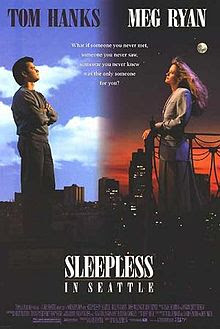

I head to New York tomorrow to meet up with S. Perhaps we will dine at Cafe Lalo with a red rose.


I head to New York tomorrow to meet up with S. Perhaps we will dine at Cafe Lalo with a red rose.
Friday, June 29, 2012

Thursday, June 28, 2012
The disaster.
One to two days ago my sister's parents-in-law were confronted with a disaster: A fire, roaring across their Colorado Springs-town. They were given 45 minutes to evacuate. Both thought it was merely a safety precaution. Both thought they would be back within two days. These shared thoughts showed in their packing—two changes of clothes and two dirt bikes from the father, and two changes of clothes, a few pictures, and food items from the fridge to take to my sister's from the mother. That was (nearly) all.
Where their home of 24 years stood now stands ash and a scattering of bricks. There is one tree, half green, half scarred, and another tree, standing resilient. The mother-in-law is in mourning. (Very, very understandably in mourning.) What does she mourn for the very most? That she didn't pack anything of her mother's—that every physical remembrance is gone.
I would mourn that too. One hundred times over. One million times. I do mourn now, for this family member of my family member. I cannot even comprehend what their loss would be like, or how their loss must feel. I realized that they too could not comprehend it. It must be why she grabbed small things—temporary things. A French philosopher I read and loved, named Blanchot, wrote a book about how "the disaster" could not be written. This disaster could not even be thought of.
And the thing that happens after natural or other disasters is happening to me now. I am thinking about my sister's family, and my sister, and myself. I am thinking about the things that I value. I am thinking about the losses that may come, and the losses that have come. I am thinking about how to best be prepared. I am thinking about what I would have grabbed.
Spencer was asked this on a little questionare for my bridal shower. "What would you take in a fire?" He had to answer, and then I had to guess his answer. I got it wrong, because he said his piano. Jokingly. Not comprehending the reality that sometimes there are fires, and you have to take things from them if you want to keep them safe. If you want to keep them. I asked him again, this week, these days. We talked about our answers together: Each other. Our computers. Our passports. Our important papers. Pictures we might have (though we try to keep them backed up).
If I could, I would take my white bike, but it is resting in my grandma's garage. If I could, I would take my off-white wedding dress (that belonged to my other granny), but it is resting in my parent's home. (I wonder if I am safer, with my things divided, or if there is more of me to lose.)
I think again of the fragility of life, and how it can change in a moment. How it can be defined (or redefined) in a moment.
I think of my own disaster, that I tried to write about, because I needed to get it out of me. I needed the words down on paper, so I could be grateful, and so I could remember in a way that heals. Almost every day I notice the scars on my legs and wrist that weren't there before. One day when I couldn't keep from looking at them, Spencer reminded me, "Everyone has scars." I pointed to the biggest one. I touched it gently, while whispering something to Spencer about its size relative to the others. He told me that I had a bigger one, one that I hadn't noticed. He was hesitant to tell me, but told me anyway: it was on my back, where I had laid in a pool of glass and blood for hours. Of course it was. How could I have forgotten?
The last few days have found me glancing at my scars in gratitude. They are reminders that I am still alive.
Their house before the ravaging:

Their house after:

Wednesday, June 27, 2012
In a Better World.

It began with death and ended with life, and explored many, many important themes in between: grief, loneliness, friendship, false strength, genuine strength, meekness, courage, forms of power, war, brutality, healing, marital relationships, separation, vengeance, forgiveness, sacrifice, and redemption.
Written out, these themes may seem a little trite, but in presentation they were shattering. In fact, the film affected me so viscerally, that many moments found me perched upon my seat in the back row, craning upward to better see the sub titles, while other moments found me hiding my face with my hands or crying hysterically. Never mind that I was in a room filled with near strangers. There was no other way for my body to react to the things that it saw on the screen. I also felt my heart—the palpitations. There was no stopping that either.
When the film ended, we sat there quietly and collectively, for a long time. Eventually I stood quietly, and walked quietly, with only the rare word spoken to, or from, my friend. It was a longer time before I could really speak. My soul was still reacting. My body and mind were still reacting.
Even now, I am processing it.
Monday, June 25, 2012
My homework.
(In which I venture the bold task of translating Kierkegaard.)
Jeg har kun en Ven, det er Eccho; og hvorfor er det min Ven? fordi jeg elsker min Sorg, og den tager det ikke fra mig. Jeg har kun en fortrolig, det er Nattens Taushed; hvorfor er den min Fortrolige? fordi den tier.
I have only one friend, and that is echo. Why is it my friend? Because I love my sorrow, and echo does not take it away from me. I have only one confidant, and that is the silence of the night. Why is it my confidant? Because it remains silent.
Enten Eller, bind I, side 36/Either Or, volume I, page 36.
Min Kjærlighed fortærer mig, kun min Stemme laegger tilbage, en Stemme, der har forelsket sig i Dig, overalt tilvisker Dig, at jeg elsker Dig. O! Traetter det Omnfatning bliver jeg min gennemreflekterede Sjæl om Dit rene, dybe Væsen.
My love consumes me; only my voice remains, a voice that has fallen in love with you, that whispers everywhere to you that I love you. Oh! Does it weary you to hear this voice? It surrounds you everywhere; I wrap my thoroughly reflective soul, like a manifold mobile frame, around your pure, deep being.
Enten Eller, bind I, side 376/Either Or, volume I, page 376
Saturday, June 2, 2012
Monday, May 21, 2012
Hummingbird Heart.
My heart is racing. My heart is racing.
The reason:
Once upon a time, in a month long, long ago (aka March), many a thing I was interested in was due, on the same day. Some serious things, and some silly things. I decided to try for all of them.
Thanks to that initial decision, I won a $200 gift card to a local boutique, became a 2012 Summer Scholar at St. Olafs in Minnesota to learn Danish this June/July, and most recently (read: 120 seconds ago) was accepted to speak at a conference in Copenhagen, Denmark this August(!)
Try. Everything.
Wednesday, May 16, 2012
Finished!
Remember that one time I chose to go on two trips in the middle of my finals? Oh, me too. Let's just say I have never been more excited to finish a paper. And also that tomorrow begins the slow recovery of my life.
Wednesday, April 4, 2012
Conference Weekend.
I missed Utah, and bike rides, and picnics, and waffles, and front porches, and kites, and not having an almost 30 page paper due that Saturday.
I liked President Uchtdorf's talk and knowing that many people I care about were hearing the same messages and songs I was, albeit in different cities, states, and countries. I liked watching the Hunger Games Saturday eve.
I liked President Uchtdorf's talk and knowing that many people I care about were hearing the same messages and songs I was, albeit in different cities, states, and countries. I liked watching the Hunger Games Saturday eve.
Tuesday, April 3, 2012
Maybe a lot of things happened in the last week and I was too overwhelmed/tired to write about any of them.
And maybe I am going to spend the next week or so trying.
Subscribe to:
Posts (Atom)