Showing posts with label Europe. Show all posts

Saturday, February 11, 2012

Mormon Women Oral History Project.

AKA: The best thing I did in Vienna.

Have you ever sat down with someone, and asked them to tell you all about themselves? I have done this. In fact, I have spent days and weeks doing this in a foreign country, right before I was about to say goodbye. I wanted to do it the whole time I was in Vienna, because there is a project I believe in that is comprised of such asking and such listening. It is called the Mormon Women Oral History Project, and was started by a woman I admire, named Claudia Bushman, when she was teaching at my school in California.

The point of the project is in many ways wrapped up in its name: to let Mormon women speak their own histories, and to record them and transcribe them. It is so simple but so beautiful, because sometimes women's voices are forgotten in scriptural and spiritual discourse. I wanted to help the project become even more international to open up the voices still further, and recognized that my Vienna stay gave me a unique opportunity to do so.

I was able to meet with sisters from the UK, the Philippines, Austria, Canada, and the United States. Together they represented a fair spectrum of human experiences and backgrounds. Each was a woman I cared about. Each was a woman I would call friend. As I sat with them, I asked them about their life, their faith, their families, their experiences inside and outside of the church, and their feelings on LDS women's issues. I listened as they told me diverse stories and viewpoints. I remembered that the church is big, not only geographically, but ideologically. I remembered that it remains relevant in those differences, rather than in spite of them.

My favorite question of all asked simply and straightforwardly, "What is your conception of Heavenly Mother?" I understood the courage of this question, and its assumption that these women did have a concept of their Mother in Heaven that was just waiting to be teased out. Maybe I liked this question because I shared that personal hope. And maybe because of that personal hope/investment, I found myself nervously hurrying to fill any silence with a softer, less effective question: "Or do you have a conception of Heavenly Mother?"

Many of them did, but not all. Some expressed a desire to know more. Some expressed theories on why we don't. Some were satisfied with their supposed reasons. Others were not. One shared the most beautiful thing about Heavenly Mother I have heard in all of my 2008 paid-by-BYU months of Divine Feminine research, and all of the years that have intervened.

It concerned a personal story/revelatory experience in the temple. The woman was sitting there, hurt and frustrated with her husband—more hurt than she could have imagined—when she felt God speak to her. In her anger and frustration, she said, "No. I don't want to speak to you. I want to speak to Mother." And then she felt/heard something else. "She's here." Like when you're in college and you call home before the time of cellphones, and your dad picks up, but really you just want to talk to mom. And your dad goes and gets her, and sometimes he stays on the line too. It was like that for this woman. She felt them both, and knew that they were both listening and that they both care. And because her Heavenly Mother was there, she could speak. She could speak honestly and openly, and she could let them give her an answer.

It reminded me of something Eugene England once said at a BYU Women's Conference. He started out by asking, "What is a good basis for imagining eternal marriage, then?" before he went on to answer:
The plain scriptures, I believe. In the first place, modern scriptures and revelations suggest quite plainly that we would more accurately and profitably read the scriptural references to "God" as meaning God the eternal partnership of Heavenly Father and Heavenly Mother. They have a more perfect unity even than that of God and Christ and the Holy Ghost, and so the word God implies both of them, at least as much as it denotes the three beings in the classical Christian trinity called "God." 
Such a more correct identification of "God" might help us better comprehend the direct role our Heavenly Mother played in our creation and salvation. When we read in Genesis that God said, "Let us create man in our image," it makes most sense to read it as God the Father and God the Mother speaking as One. When we read in John that God sent His only begotten Son to save us, it would be better to understand, as it certainly makes more sense, that our Heavenly Parents sent Their only begotten Son. 
This process is truer to the evidence—and to our real needs as men and women—than looking for a female God between the lines in the scriptures or in apocryphal works or mythologies, as many feminist theologians are doing. It might help us better imagine our futures as husbands and wives, equally yoked in what Shakespeare called "the marriage of true minds"—and to work toward that future now. 
Second, modern revelation tells us that when God put "man" on the earth, "in the image of mine Only Begotten created I him; male and female created I them." (Moses 2:27.) Clearly men and women were both created in the "image" of Christ. That would seem to mean we are created in the image of the Heavenly Parents who together make up the "God" whom Christ came to reveal, that is, the perfect eternal partnership He came to teach us how to achieve and to show us in His life and character what we would be like when we achieved it.
On another day I asked myself these same questions (the ones I had been posing to my friends). Spencer was at school, so I sat on our couch, microphone headset in tow, and I talked and I talked for three hours, out loud to just myself. I talked about the things that are hard for me in the church and I talked about the things that are good for me. I talked about my feelings on sisterhood and the myriad ways that women have blessed/saved my life. I talked about my own experiences researching Heavenly Mother, and I talked about the million times God has answered my small, simple, and specific prayers in ways that I know are from heaven. I talked about lessons learned from my father and mother, and how I know that my mom believes in prayer because when I was a child I walked in her room to talk to her and found her kneeling beside her bed, quietly crying, when she thought no one was looking. 

As I spoke, my first feelings were renewed: that this project is an important one. There is something so powerful and beautiful and affirming in letting individuals tell their own stories. It is redemptive, really. And in this context of spirituality, where women's voices are often lacking, the simple act of asking and the even simpler, but not less essential act of listening, becomes doubly important. I believe that the French philosopher, Levinas, would agree, because he understands that it is this simple back and forth talking that lets us have relationships of peace. It is how we let the other present themselves to us as a self. It is how we avoid violencing the other.

One more interesting thing happened: as I sat with these women, these sisters who I already cared for, and as I heard their stories, my heart was filled with even greater love for them. I felt the spirit every time. I felt love and tenderness every time. I remember reading in Ender's Game that it is impossible to truly know someone and not love them. Participating in this project is the strongest I have ever felt that. One possible reason for this, is because hearing someone's words, in their voice, from their mouth lets us rejoice with them when they rejoice, and mourn with them when they mourn. The simple act of talking becomes healing, and things that are hard no longer feel quite so burdensome when they are shared, when they are spoken. And it also works the other way: things that are happy feel even happier. Even more joyous.

I am left with the sneaking suspicion that we should all be telling more stories. We should all be asking for more stories.

(And as a p.s. question, added after the first writing: What question would you like to ask? What question would you like to answer?)

Thursday, February 9, 2012

Americans in Paris.

S and I went to The City of Lights to look at Christmas lights, and you know, to celebrate Christmas. I think it may have been the only way that being away from family for the second year in a row was (somewhat) bearable. It was a lovely city, and one of my favorite Europe cities. Perhaps because it reminded me so much of New York, in every good way possible. It also had delicious pastries on every corner. While there we most definitely lived on croissants, crepes, baguettes, pan de chocolates, and cheese--all kinds of delicious cheese. Fortunately while there we also walked a lot, so I felt good about it.

One of those walks has been mentioned previously. It celebrated the completion of my 40 page Kierkegaard paper, and was to the Eiffel Tower and back. We got there after it had closed, so ended up going a second time. I wanted to take the stairs up, to have the experience and to see the city. It was amazing to me how different the famous tower looked up close, compared to far away, and compared again to pictures, videos, and other representations I have seen of it. Up close it is not that pretty, except for the lights. Or it is pretty, just not in ways I expected. It is made from a course metal. Spencer told me the French didn't like it very much at first, and wanted desperately to take it down after its entrance into the world for the World Fair. Now I can't even imagine Paris without it. I am sure many feel that way. Someone exercised good wisdom in persuading the Parisians to let it stay.

We also got to visit a few museums. I wanted to see the Louvre because I (and everyone else in the city) wanted to see da Vinci's famous painting. It was nice, but smaller than I imagined. Winged Victory--a very commanding/inspiring headless statue with wings--was more impressive. I also didn't know that the Louvre only housed old paintings. I was expecting to see Monet's, Picasso's, Van Gogh's, etcetera. Sadly for me, I was in the wrong place. I think my favorite thing about the Louvre was not a single work within the structure, but the structure itself. It really is a beautiful building, as so many in that part of the world are. Still, Spencer and I loved the Pompidou Center more. This may not have been too surprising, because we received a very strong recommendation, naming it a favorite in the whole of Paris. It is also housed in a cool structure, though cool for completely different reasons. The purpose of the Pompidou's structure is to have all of the things on the outside of a building that normally go inside, but distract from the meaning of the building--things like air ducts, electrical ducts, and water lines. The art inside was also better. Or at least better to me, and to my interests. Architect Spencer liked the Pompidou more because he modeled a building after it, is friends with the individual who designed the restaurant on the top floor, and finds it one of the best contemporary art museums in the world.

More Paris highlights include visiting that particular restaurant designing friend, who has also done some other cool things in the city and country like design a hip, bright green fashion school on the Seine River and a sunny orange building in Lyon. He was very nice, works with his wife, and has a little daughter. Somehow I really liked that he had a family and was similarly down to earth. For whatever reason I don't picture most architects like that. Afterward we got to meet up with our best European friends: Katherine and Eric. They had been traveling around Spain and had a 4-5 hour stop in Paris on their way back to Vienna. It was nice to spend Christmas Eve Eve with them. In Spencer's words, they made our Vienna/Europe experience 100 times better. That night we also enjoyed Paris' many (English and non-English) bookstores, and watched The Artist, which film I whole heartedly recommend. Christmas day we slept in, opened stockings, ate pez and other good treats, before going to another friends for dinner. We met her in Utah this past summer, and she is very kind. Her family: equally so.


The last one was taken in Vienna, but you get the idea.

Friday, February 3, 2012

I said this on a Sunday.

(In Vienna, early fall.)

James 1:27 states, "Pure religion and undefiled before God and the Father is this, To visit the fatherless and widows in their affliction, and to keep himself unspotted from the world." The first time I remember hearing this scripture, I was in high school and was running around the local track with my father. We ran together often, and as we ran our conversations frequently turned to things of the spirit. He told me that this verse extended to everyone who was lonely, and everyone who was in need, including the poor and the destitute. Because of this, I am going to include those things as well.

President Dieter F. Uchtdorf spoke about the Welfare Program of the church in this last conference. Among many important things, he said, "Sometimes we see welfare as simply another gospel topic--one of the many branches on the gospel tree. But I believe that in the Lord's plan, our commitment to welfare principles should be at the very root of our faith and devotion to Him."

There are three main points that I would like to impress upon each of you. The first is that we are all beggars. The second is that we are all responsible. The third is "why" we give. I would like you to think about these things as I talk with you.

One. We are all beggars. There are probably times when you have needed help. The help that you have needed has probably varied. At times it may have been an answer to a temporal need, at other times a spiritual one. Perhaps some combination. I hope that that help came, in whatever form you needed it.

There have been times in my life that I have needed help. One of these instances occurred last year, after I finished my Master's degree in Boston. I wanted to stay there. I looked and looked for a job. I had done well in school. I had work experience in my field. I met with professors and advisors regularly to seek help in fine tuning my resume and cover letters. All to no avail. It was a very demoralizing time for me, to work long hours every day, with nothing positive to show for it. The weeks passed. And the months. And I was still unable to secure employment. I couldn't afford to stay in Boston very much longer. Around that time, my oldest brother called me and invited me to come live with his family in California. He asked me to nanny my nephew for a few months, before his wife went on maternity leave for their second child. It rescued me. It instilled my life with new purpose. That purpose was to love a 2 year old child with curly, black hair--to read to him, play with him, and feed him. I was able to help my brother, but even more, he was able to help me, and do something that I could not do for myself at that time. He was able to give me a place to sleep and a car to drive, among many other generous temporal things. There were also many spiritual gifts given to me at that time, including love and encouragement. Because of those things, I was also able to use that time to apply to PhD programs, and ultimately got into my dream school. Then there are the kindnesses of my sister-in-law. There was one unfortunate month during that stay that I was very ill, and could barely leave the house. I was sick and she more than visited me. She bought me juice. She shared her meals with me when I was too tired to cook food for myself. I remember one particular evening when she ate sushi with me and talked with me.

I have not only been blessed by family members in times of need, but by ward members, including those in our shared ward family. Two days after our arrival in Vienna, my husband and I were still without a place to stay. We happened to meet a sister from the ward. A kind sister. She asked my husband how we were, in a very genuine way, and he told her we were fine. Probably also in a very genuine way. I however, who am not quite as adventurous as my husband, was not fine. She asked me how I was, and I started crying. She listened as I told her our story--how we were married one month before, how the day after that, we were hit by a semi-truck, did an aerial through the sky, and landed upside down in a deep ravine, how because of that we were unable to leave for Europe as early as we had planned, how despite that, we had spent the last two weeks in Europe, bicycling across Slovenia and Croatia, and how (for the time being) we had only those things we had been carrying on our bikes, how we spent our first night in Vienna at a hostel and the second night sleeping beside a campground, because the campground itself was unfortunately closed for the season (unbeknownst to us), and my knee was too hurt and too injured to ride any further.

When I finally stopped talking, this sister did what sisters do. She gave me a hug, and invited us into her home. And after bicycling many days in the wilderness, her house truly was the land of milk and honey. And even more wonderful, it was the land of herbal tea and American peanut butter--which two things I had been desperately missing.

We were strangers, and she took us in. We were hungry, and she fed us supper. I was dirty, and she let me take a shower in her bathroom. She handed me a towel. She showed me where the shampoo was. The conditioner. She let us wash our clothes. I think she did these things, because she knew, like King Benjamin, and like others, that when she did these things to us, she was doing them to Christ, and was, in a very real way, "merely in the service of her Lord."

These original kindnesses extended into deeper kindnesses. One of my first thoughts was that we would never be able to be as nice to this couple as they were to us. Then I realized that on one hand, there might come a day when we would be able to be that nice to someone else. We could as it were, "Pay it forward." But, on the other hand, I realized that that wasn't really the point. It wasn't really the point that I couldn't repay them deed for deed, because while that is still true, my current status does not make me exempt from service or from giving. I am still responsible. Right now. Regardless of my circumstances. I can still share meals with those who may need nourishment or company. I can still give of my time. Etcetera.

None of us are exempt from this pure gospel of giving. And indeed, each of us is responsible for everyone else, which is my second point, confirmed by President Uchtdorf: "Please do not think that this is someone else's responsibility. It is mine and it is yours. We are all enlisted. “All” means all—every Aaronic and Melchizedek Priesthood holder [and I would add every Beehive and Relief Society sister], rich and poor, in every nation. In the Lord’s plan, there is something everyone can contribute."

My third point concerns why we serve. President Uchtdorf reminded us that we visit the orphans and widows, feed those who are hungry, and clothe those who are naked because all things are spiritual to the Lord. He said, "The two great commandments--to love God and our neighbor--are a joining of the temporal and the spiritual. It is important to note that these two commandments are called "great" because every other commandment hangs upon them." He went on to lament, "Unfortunately, there are those who overlook the temporal because they consider it less important. They treasure the spiritual while minimizing the temporal. While it is important to have our thoughts inclined toward heaven, we miss the essence of our religion if our hands are not also inclined to our fellowman."

Because this is the Lord's principle, the Lord himself taught it when He was on the Earth. It explains why, time after time, He took care of people's physical needs first, whether by feeding them loaves and fishes, or by healing all manner of their infirmities. One important time, he even encourages the Nephites to go to sleep. It is in 3rd Nephi, after he visits them and teaches them. He said, "I perceive that ye are weak, that ye cannot understand all my words which I am commanded of the Father to speak unto you at this time. Therefore, go ye unto your homes, and ponder upon the things which I have said, and ask of the Father, in my name, that ye may understand, and prepare your minds for the morrow, and I come unto you again." I really appreciate these verses, because I know myself when I am hungry, and I know myself when I am tired, and know that during those times I don't see reason, let alone the soft, gentle guidance of the Spirit. Christ wanted to teach the people. He wanted to nourish them spiritually, but He also knew that not even He could do that effectively until their physical needs were met, which in this case meant sleep.

I recently saw something very beautiful, and because it is not only beautiful, but relevant, I am going to share it with you. It was a short video, showing a Brahmin man who knew these same truths. In his own words:
I was working for Taj Group of Hotels Bangalore. I saw a very old man. He was eating his own waste for hunger. I thought what is the purpose of my life? What am I going to do? In a star hotel, I feed all my guests. But where in my hometown there are people who are living, even without food. I quit my job, and I started feeding all these people from 2002... We feed the homeless, mentally ill, destitute, and the old people who have been left uncared for of the society. People are suffering for food. They don't have food to eat. If you don't give them food to eat, they will die of human hunger. I cut their hair. I give them a shave, I give them bath. For them, to feel psychologically that they are also human beings, there are people to care for them, they have a hand to hold, hope to live. Food is one part. Love is another part. So, the food will give them physical nutrition. The love and affection which you show will give them mental nutrition.
Being a Brahmin community and an orthodox family there are a lot of objections. Brahmins are not supposed to touch these people, clean these people, hug these people, feed these people. Everybody has got 5.5 liters of blood. I am just a human being. For me everybody the same. There are thousands and thousands, and lots and lots of people suffering. What is the ultimate purpose of life? It's to give. Start giving. See the joy of giving.
I especially love his testimony that, "Food is one part. Love is another part." It is true. It is also that same linking of the temporal and spiritual that President Uchtdorf talked about. And while we are told that "the poor will always be with us," we must still work toward zion now. We must still work towards becoming a people of "one mind, one heart, with no poor among us" now. This is our duty. This is our call. Of this I testify, in the name of Jesus Christ, amen.

Saturday, January 28, 2012

Car wreck(ed).

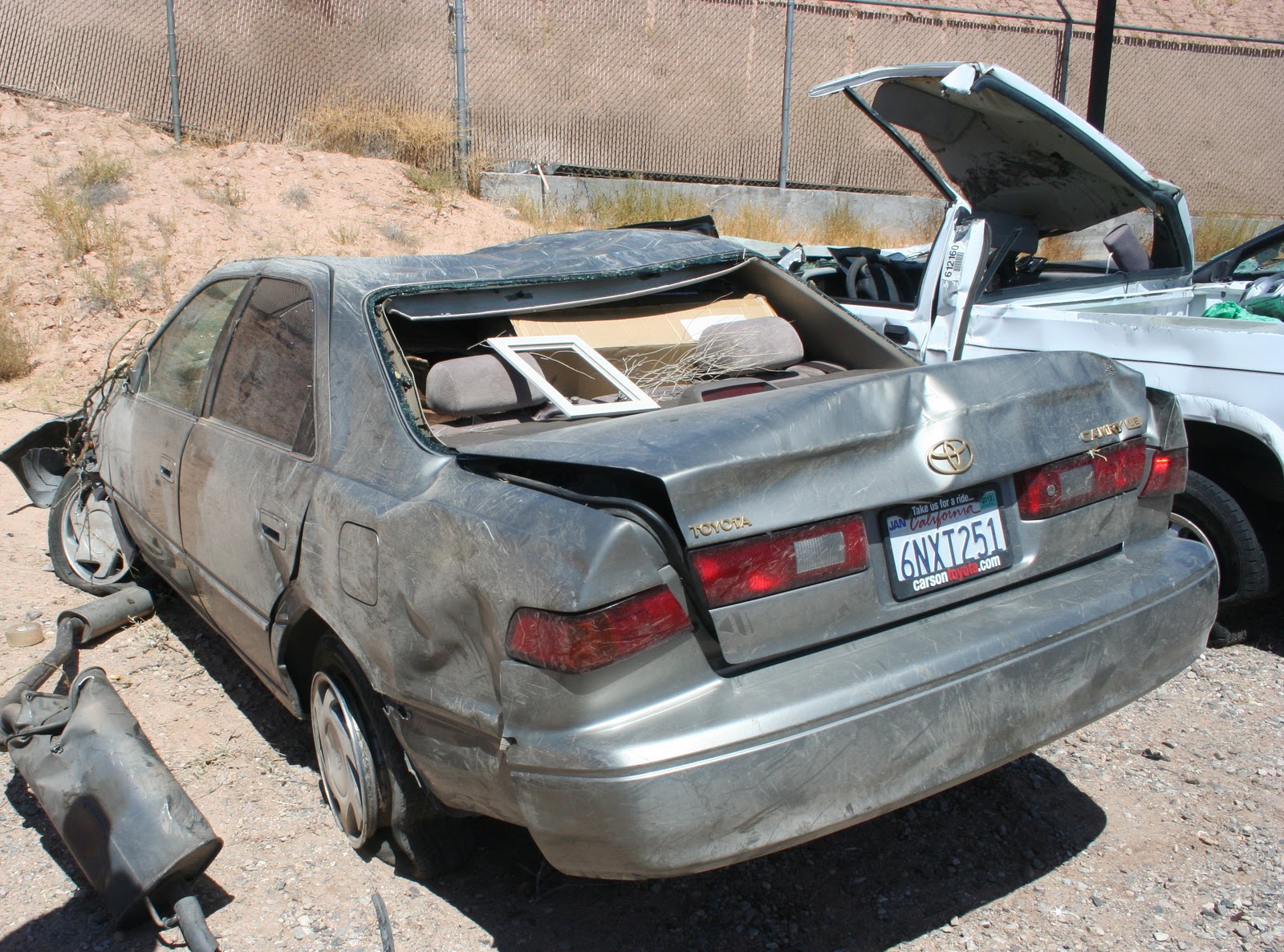
This might be a sad post, but it is necessary for me to write. I want to remember what happened, so I can be thankful for the miracle that I am still alive and Spencer is still alive. It happened the day after we were married. The very day. We saw my family that morning. We ate crepes. We opened gifts. We prayed because we were about to drive to our home in Los Angeles, from my parent’s home in Provo, Utah, and while it was a drive we were familiar with, my parents taught me to pray before going on long journeys. We got in our car. We drove past St. George. We were in Nevada, near Mesquite. Spencer was driving. It was my car. Our only car. Things were fine until they weren't: we had good snacks, good tunes, and a good book to read. The unraveling of the fine began with a large semi-truck appearing in the mirror. I saw it first, from the passenger side. It seemed dangerously close, and was dangerously getting closer. In sudden urgency I asked Spencer if he saw it too. He did, but there was little he could do. There was another semi in the right hand lane, so his initial effort to steer that way also had to be accounted for. He turned again toward the left, and that is when we were hit from behind, on the left rear side. The car spun, went off of the freeway, did an aerial in the sky, rolled down a hill, and landed upside down in a deep ravine. We were still intact, but barely.

Spencer was momentarily knocked out, making me momentarily believe that he was dead. One day after I married, I thought my husband was dead. I called Spencer's name. Some seconds passed before he came to. Anyone who has been in a similar situation knows that seconds in such instances feel like eternities, and eternities like seconds. And perhaps to thoroughly demonstrate that he was not dead, but alive, Spencer did what any alive person would do in his situation and climbed out a shattered window, before climbing back in. I think it was also to show me that he could breathe and that we could breathe, because for reasons I cannot explain, I was terrified that we would suffocate (and expressed such fears), despite the fact that every window was broken open, and therefore letting air in. For my part (and though very much alive) I was laying still in a pool of glass and blood. And would continue laying there for a long time, because when the EMT’s came, I told them that my neck hurt, because it did. And then they wouldn’t let me move after that. I regretted not telling them until after I got out of the car. One reason it took so long is that they were having trouble killing the battery, and understood the danger of the car starting on fire, so were themselves afraid to come in. I assure you that them telling me this did not make me any calmer. Eventually they did get me out, and onto a board.

Every act of movement tortured me. I have seen those boards before, but I didn't know how hard they were--I didn't know that they were hard. I thought that they would be soft and comfortable, comforting the injured. Instead, they are almost piercing in their firmness and inability to give. Being lifted up into the ambulance was a new kind of pain, and then having my head and neck secured against the board was another. Whatever they used was digging into the back of my head, and that became the pain I focused on. If I could have lifted my arms up (I couldn't, though they weren't strapped), I would have tried to rip that thing off of me. Spencer was in the ambulance, but not in the back with me. I couldn't see him for their rules. I kept calling his name, and pleading for him to hold my hand, hold anything. Do anything. He would call back to me, every time. He had dug my computer out of the wreckage, and opened it. I had been playing Ashley Mae's homemade video of our wedding, over and over, and now, in the ambulance on the way to the hospital, Spencer started playing it over and over too. Again, because he was apart from me, I couldn't see the screen, but listened to the words, and knew what was playing. That song, that video, was the single thing that could calm me and help me breathe simply again. In real ways it rescued me.

Once we got to the Emergency Room at the Mesa View Regional Hospital they examined me and x-rayed me. Everything felt long and painful. It was difficult for me to sit still for the x-rays, though it was equally difficult for me to move. They gave me medicine for the pain. Two pills of something. They made me throw up twice, when I stood up. (Maybe once for each pill?) And then soon after, they made it so I couldn't remember anything. One of the few things I do remember is a nurse saying that they needed to get me a top to wear, because my shirt was destroyed. I was confused, and didn't know what she was talking about. When I saw my shirt later, it was half covered in blood. There were so many holes where the glass was gouging my skin. That is what my back looked like. During this time Spencer had called his relatives. A cousin of his would be picking us up and taking us to his home in St. George. I don't remember the ride. I don't remember talking to my own parents on that ride, though Spencer assures me that I did. I don't remember the blessing I received. I don't remember the apparently constant question asked me at the hospital, concerning how much pain I was experiencing, on a scale from 1-10. Spencer told me about it sometime later, and that I always said 2. I thought it was strange and mildly funny that I would say that, on the night of the most physical pain I have ever experienced.

The next thing I would remember was not even waking up, but the part right after waking up. I was sitting on a stranger's stool at a counter. He was making me a smoothie. Spencer's dad and grandpa picked us up and drove us to LA. I slept most of the way. They flew back to Salt Lake, and we borrowed the truck for a week so we could do errands and finish moving-to-Europe preparations. It was very nice of them. All of those things, really. I would spend the next week recovering at my grandma's house, and Spencer would spend it driving into the city to try to expedite a new passport, and visa, and etcetera, since those things were lost in the wreckage. Spencer's parents and my parents would come to our much smaller reception in Claremont, to make sure that we were still alive. We were, despite sore necks, backs, and in my case knee. I was limping badly, which limp would remain through Milan and part of our bike trip, and sometimes now, when I walk up or down stairs (I am an old lady). It was so nice to see my parents. And my oldest brother. And my sister-in-law. And their very precious children. And my very precious grandma. And mine and Spencer's very precious friends.

We would make it to Europe a week or so later, despite the wreck, and despite the 6,000 canceled flights due to East Coast earthquakes/hurricanes. All it would take were some pretty terrible circumstances in Baltimore, Maryland (of which city I might be terrified, due to mine and my brother's love of The Wire), and some less terrible circumstances staying with Spencer's sister Kiersten in New Jersey before we could catch a flight to France. I would spend the next several weeks watching bruises appear and slowly disappear. They covered my legs, my hips, my torso. While bicycling Spencer would have to tell me if it was free to cross streets, because I could not turn my neck to check myself. I still have scars on both knees, and one on my right wrist, but am doing okay otherwise.

This is where we fell.
This is my broken car, frontside.

This is my broken car, backside.

This is my shirt.

This is some of my family, whom I love.